
Implicit Rent: The Yield Owner-Occupiers Never Calculate
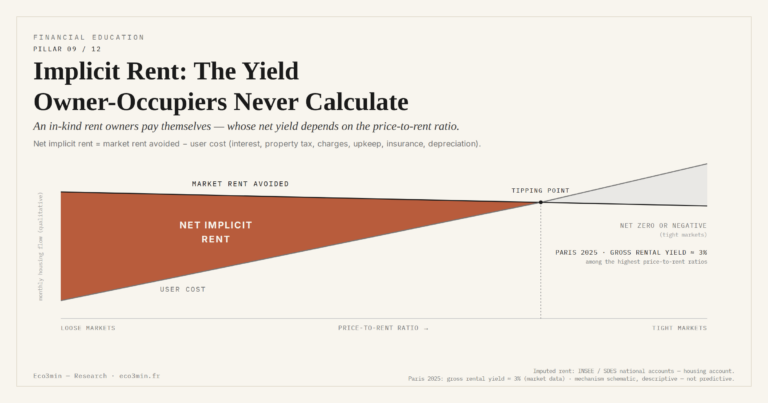
Owner-occupiers pay themselves an in-kind implicit rent, a real but rarely measured flow worth around 10% of French GDP. This analysis explains how it reshapes the buy-versus-rent comparison.

Owner-occupiers pay themselves an in-kind implicit rent, a real but rarely measured flow worth around 10% of French GDP. This analysis explains how it reshapes the buy-versus-rent comparison.
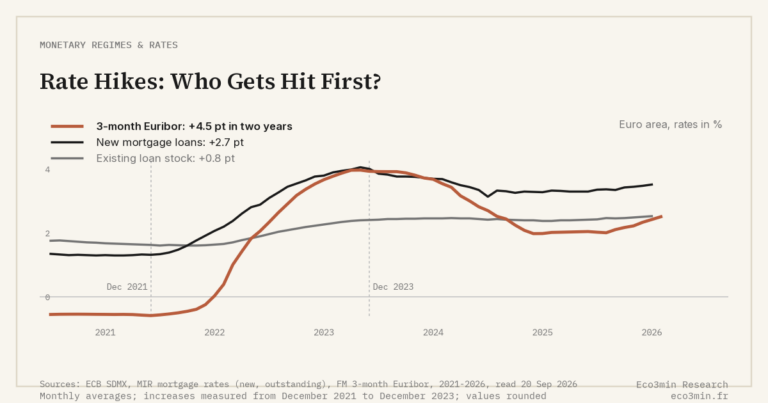
Variable-rate borrowers absorb a rate hike within weeks; fixed-rate borrowers remain insulated for years. This heterogeneity, hidden in aggregate statistics, explains the contradictory diagnoses around each tightening cycle.
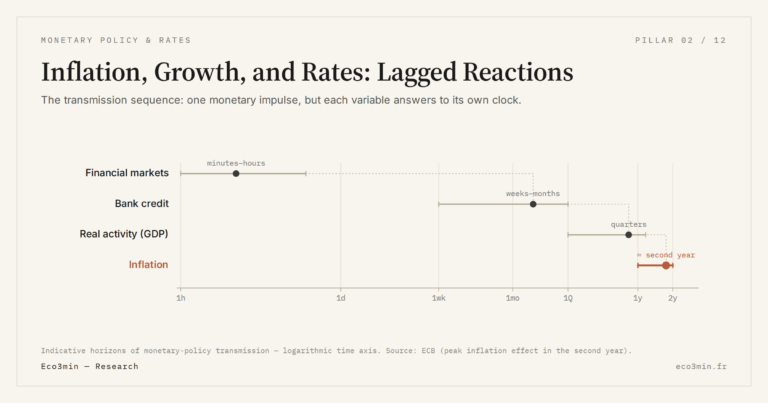
Financial markets, GDP, and inflation each respond to monetary policy on their own clock. The gap between peak effects on growth and inflation runs two to four quarters — a sequence rooted in nominal rigidities.
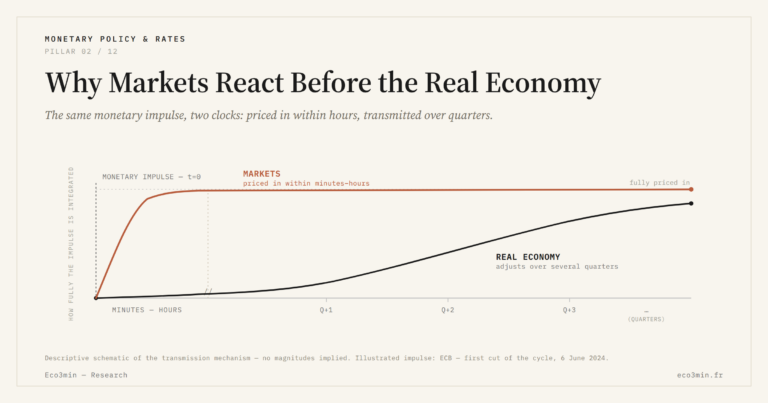
Financial markets price in monetary decisions in minutes; the real economy adjusts over quarters. This temporal divergence reflects two fundamentally different modes of integrating monetary information.
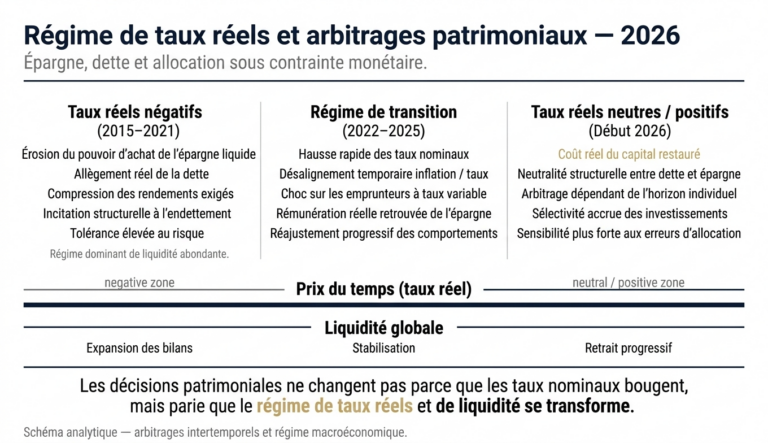
Saving, borrowing and investment decisions shift with the prevailing real-rate, inflation and liquidity regime. Three distinct macro configurations produce three different household logics — and the early-2026 neutral-rate environment leaves a narrower margin for error.
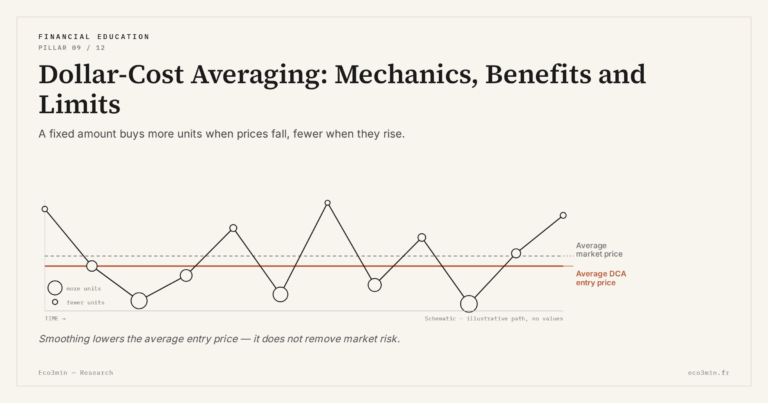
Dollar-cost averaging invests a fixed amount at regular intervals to smooth the entry price. Its main advantage is behavioural — neutralising timing paralysis — but its effectiveness assumes a long horizon and a market that recovers.
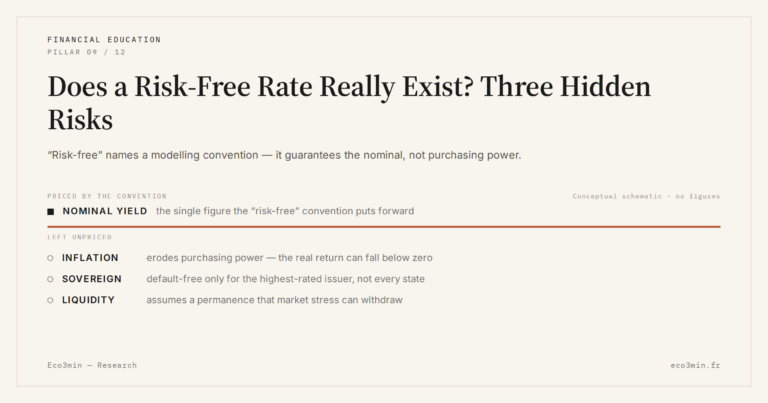
The risk-free rate is a theoretical convention, not an absolute guarantee. Three structural risks — inflation, residual sovereign risk and liquidity stress — remain obscured by the label.
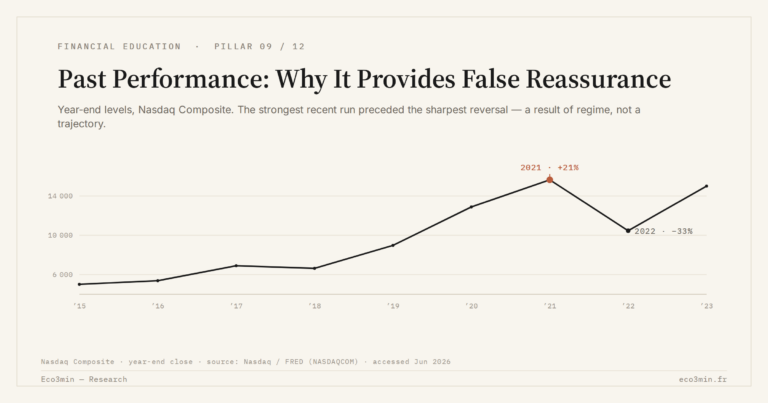
Past performance reflects a given market regime, not a future trend. This reading bias remains one of the most costly for retail investors.
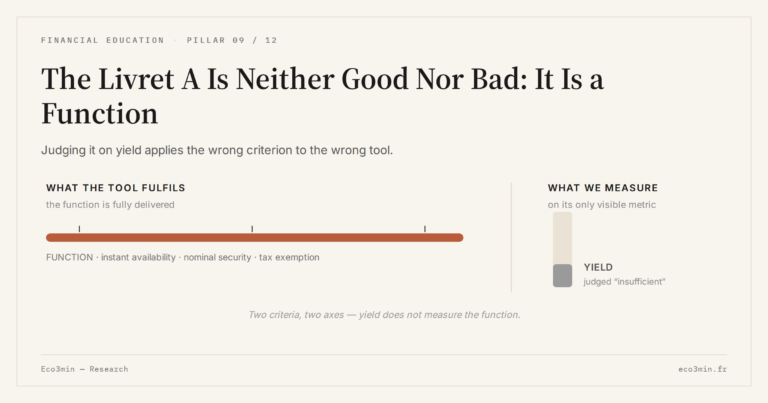
The Livret A serves a function of liquidity and nominal security. Judging it on yield confuses the tool with the objective.
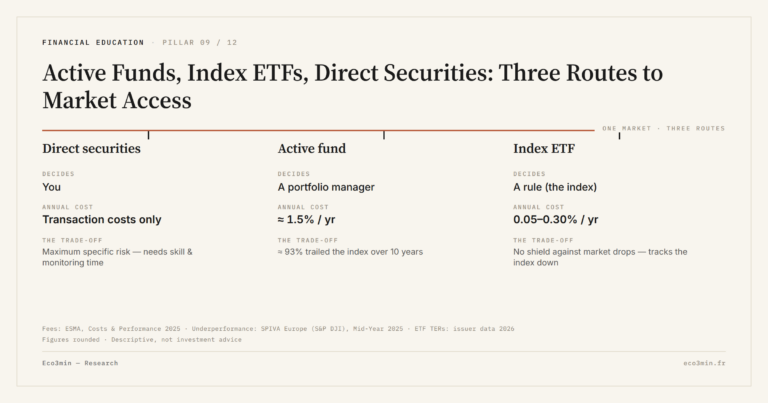
Active funds, index ETFs and direct securities involve different fees, exposures and levels of delegation. What sets these three market access routes apart.