
Why Monetary Policy Impact Is Hard to Measure
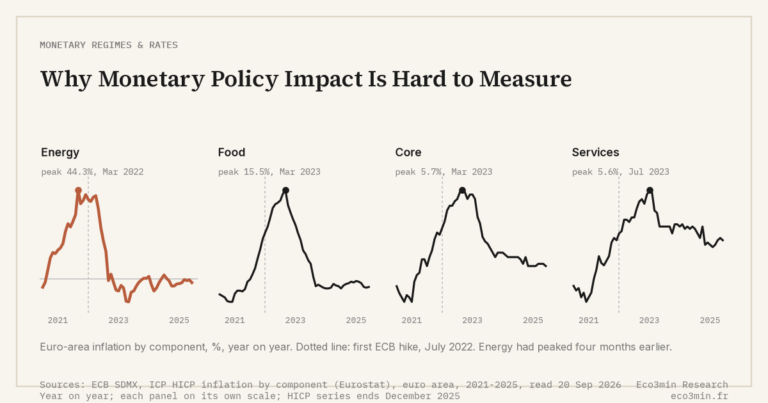
Monetary policy impact cannot be measured directly: lags, the absence of a counterfactual and the entanglement of multiple economic forces force analysts to rely on modelled estimates.

Monetary policy impact cannot be measured directly: lags, the absence of a counterfactual and the entanglement of multiple economic forces force analysts to rely on modelled estimates.
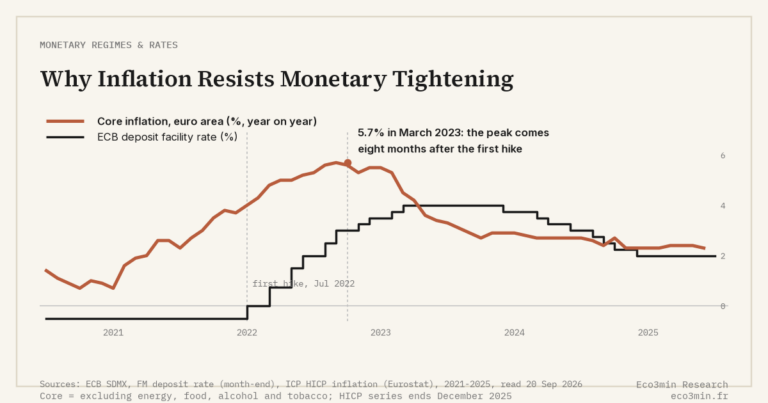
Inflation can persist despite monetary tightening because of wage inertia, indexation mechanisms and transmission lags that propagate through the price chain over years rather than months.
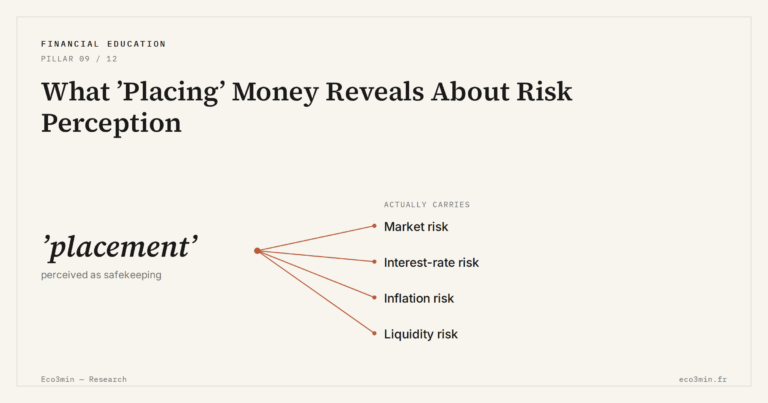
The word ’placement’ suggests safekeeping, but every financial product carries exposure. This linguistic bias persists across rate cycles and shapes allocation decisions more than is generally recognized.
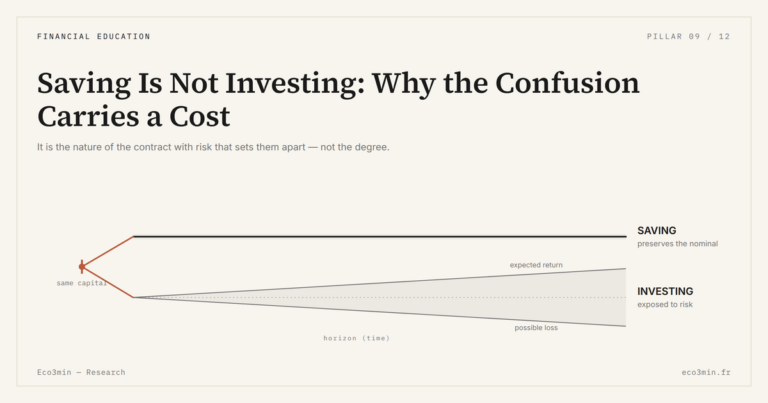
Saving preserves capital while investing exposes it to risk. The two functions are routinely confused in everyday financial decisions, with measurable consequences in vehicle-duration mismatches and misallocated precautionary reserves.
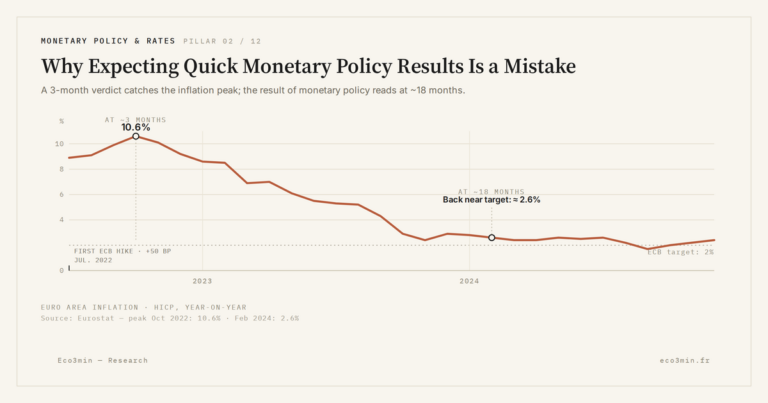
Monetary policy operates with cumulative and lagged effects over twelve to eighteen months. Expecting quick results leads to premature judgments and to two symmetric errors — demanding excessive tightening or prematurely loosening.
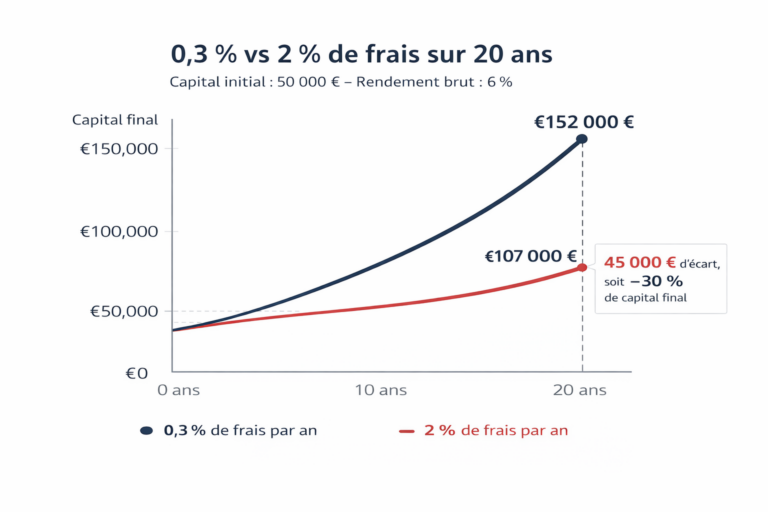
A 1% annual fee gap looks trivial. Over twenty years it can amount to tens of thousands of euros — without the investor ever seeing it move.
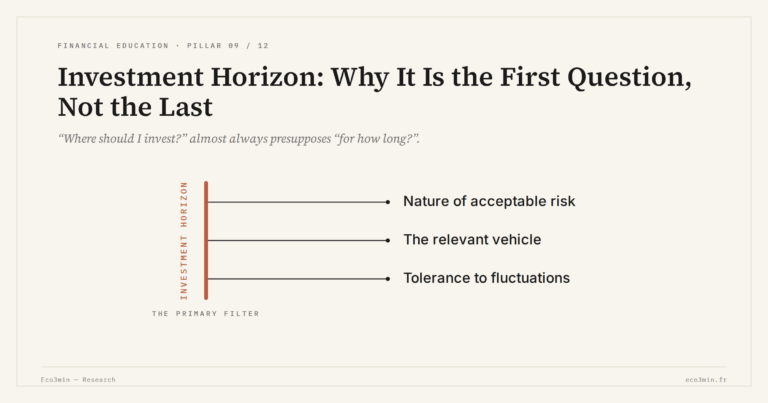
Investment horizon determines acceptable risk, vehicle type, and tolerance to fluctuations. It is the primary filter behind any allocation decision — and the variable most often skipped.
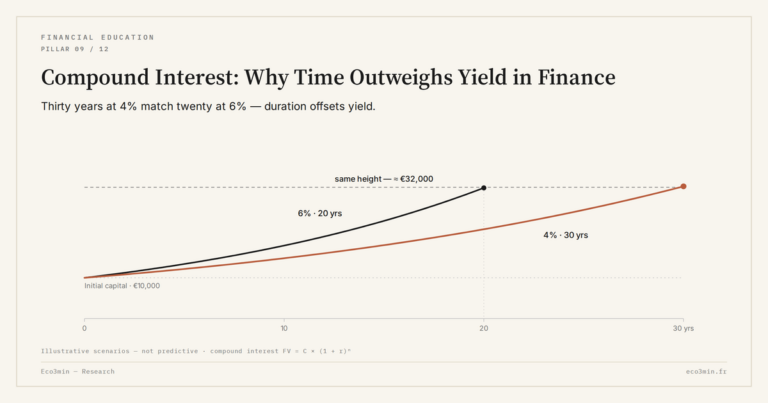
Compound interest creates exponential dynamics that the human brain systematically underestimates. The most powerful variable in finance is not the rate — it is duration.
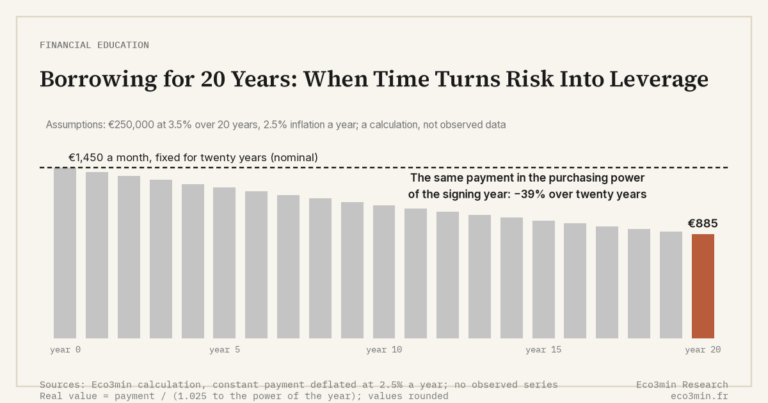
A 20-year fixed-rate mortgage locks a nominal cost while inflation erodes real debt. Time progressively reshapes the structure of patrimonial risk.
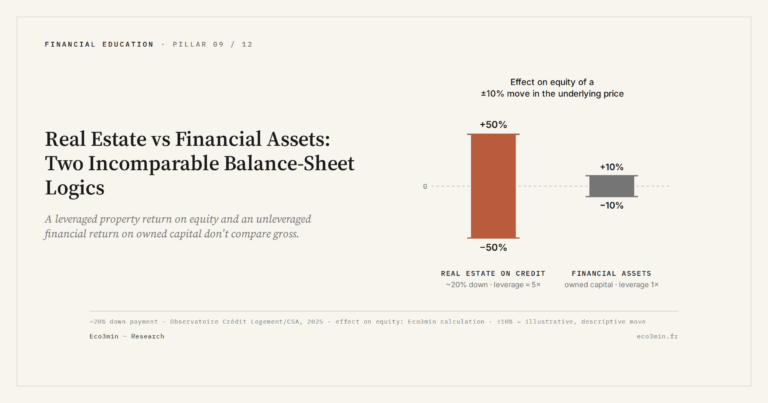
Comparing real estate and financial assets through gross yield alone misses leverage, liquidity, taxation, and horizon. Two distinct balance-sheet logics that don’t translate into each other.