
The US Current Account Deficit: Weak Link of Global Finance?
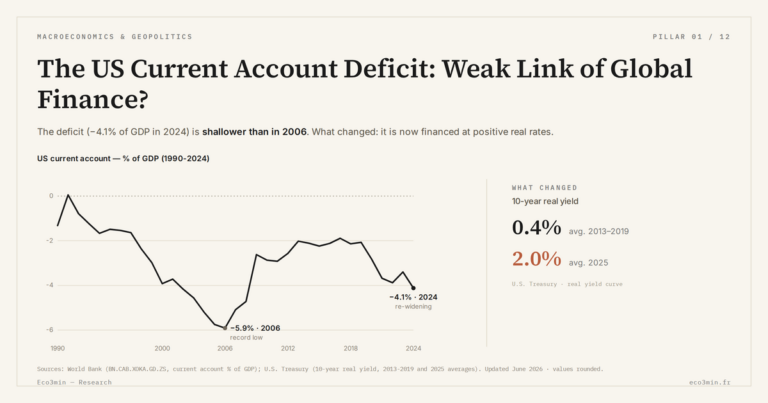
The US current account deficit: why this structural imbalance can reshape financial markets and the hierarchy of global risks.

The US current account deficit: why this structural imbalance can reshape financial markets and the hierarchy of global risks.
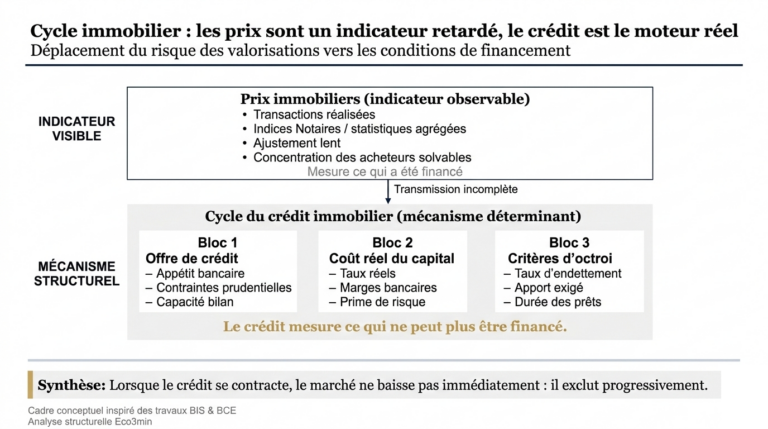
Property prices act as a lagging, fragmentary indicator. The real estate cycle is, first and foremost, a credit cycle—governed by lending standards, the real cost of capital, and the selectivity of financing.
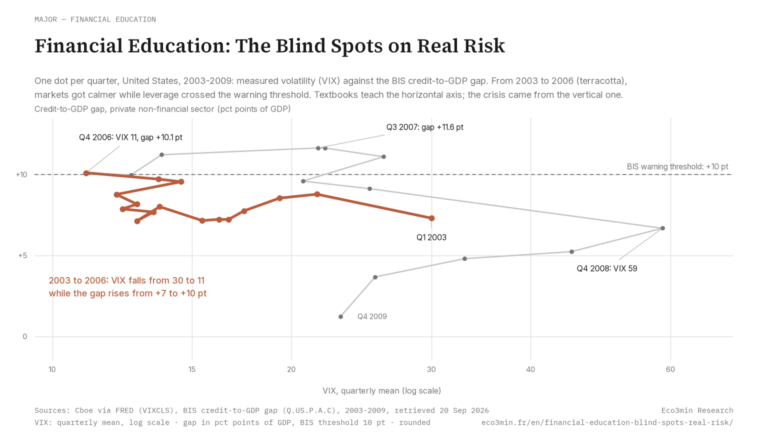
Financial education trains practitioners to manage volatility, asset allocation, and time horizons. Yet structural risk migrates within market regimes and financing channels that conventional curricula leave unexamined.
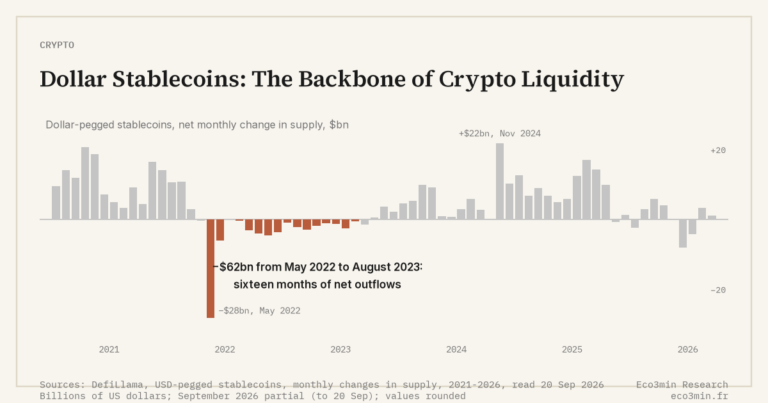
Why dollar stablecoins have become the backbone of crypto liquidity and a discreet barometer of market regimes, capital flows and systemic risk.

Does the yen still cushion financial crises? Mechanisms, recent breaks and the signals to watch as a macro-financial regime shift reshapes its function.
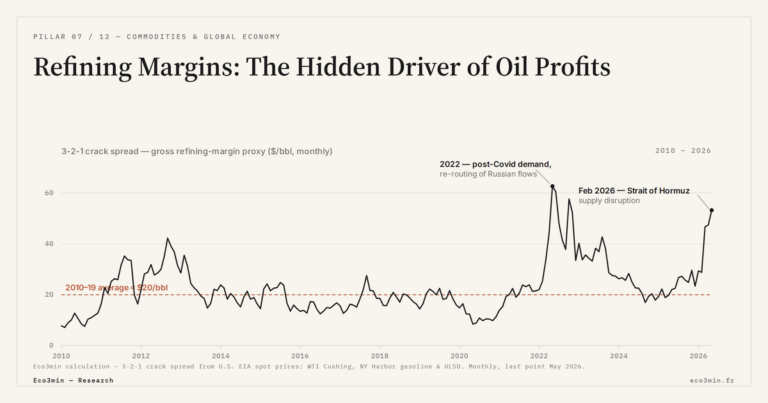
How refining margins drive oil profits and why this discreet lever — beyond crude prices — has become central to energy markets and corporate earnings.
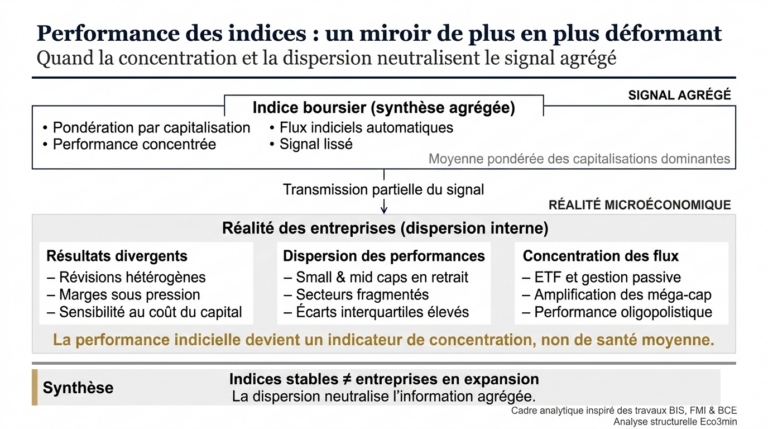
Index performance increasingly reflects flow concentration and weighting mechanics rather than the average health of listed companies. A structural reading of signal neutralisation and late-cycle dispersion in equity markets.
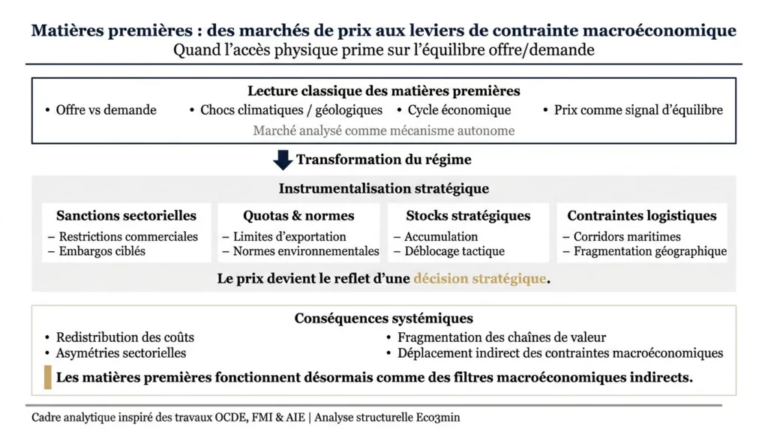
Commodities are no longer simple supply/demand markets. Sanctions, quotas, strategic stockpiles and logistical filters have turned them into instruments of indirect economic policy that redistribute constraints across global value chains.
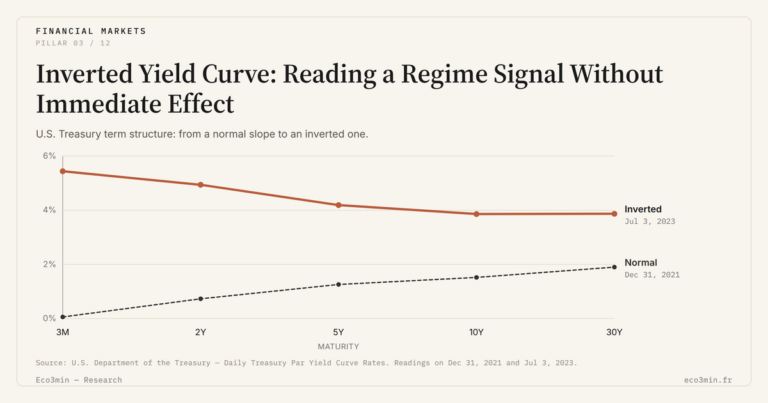
The inverted yield curve operates as a regime signal, not a timing tool. Its lagged effects are constitutive of the indicator, not a flaw — and explain why intermediate phases are often the longest and most misread.
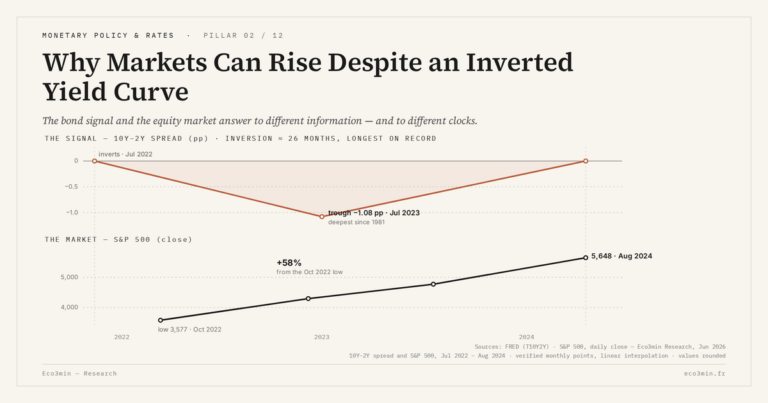
An inverted yield curve can coexist with rising markets without invalidating the signal. The lag reflects a structural disconnect between financial regime and economic regime, transmitted through credit before reaching asset prices.