
Why Property Markets Remain Cyclical Despite Public Policy

Lags, incentives and structural rigidities explain why public policies modify but do not eliminate cycles in residential property markets.

Lags, incentives and structural rigidities explain why public policies modify but do not eliminate cycles in residential property markets.
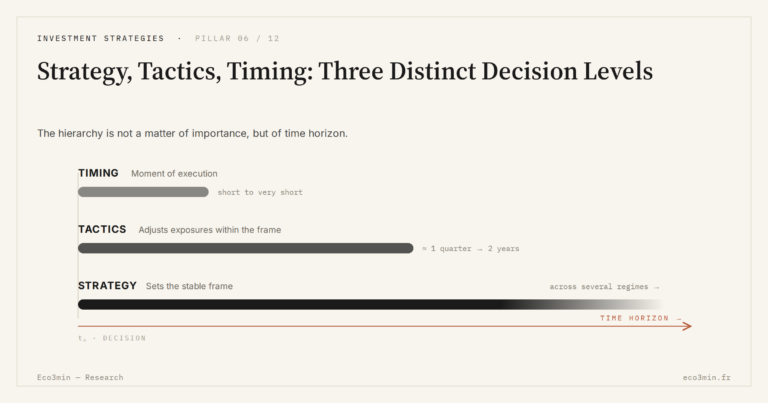
Strategy, tactics and timing operate at distinct horizons. Distinguishing them helps interpret investment outcomes without misattributing one-off results to a long-term framework.

Gross cash flows, hidden costs and time horizons explain why rental yield frequently overstates the real economic performance of residential property investments.
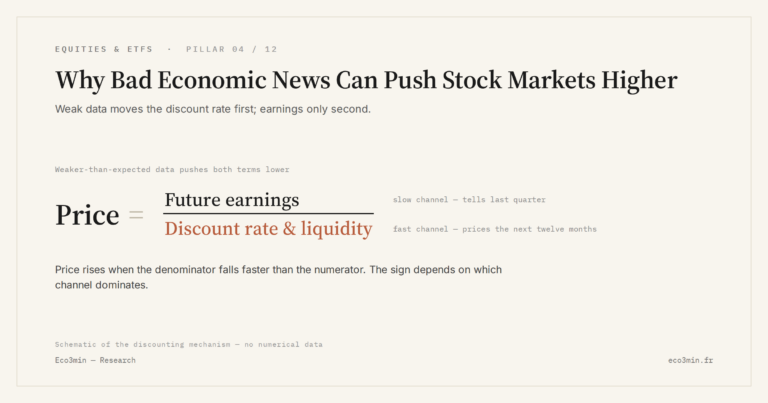
Equity markets can rally on weak economic data when expectations of monetary easing or improving liquidity outweigh the direct impact on earnings. This forward-looking dynamic explains apparently paradoxical sessions.
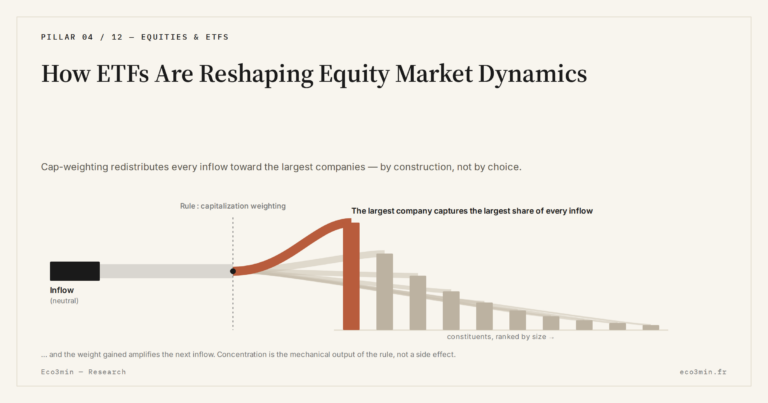
ETFs increasingly shape the structure of equity markets. Mechanical flows reinforce large-cap concentration and amplify procyclical price dynamics, well beyond the framing of passive management as a neutral vehicle.
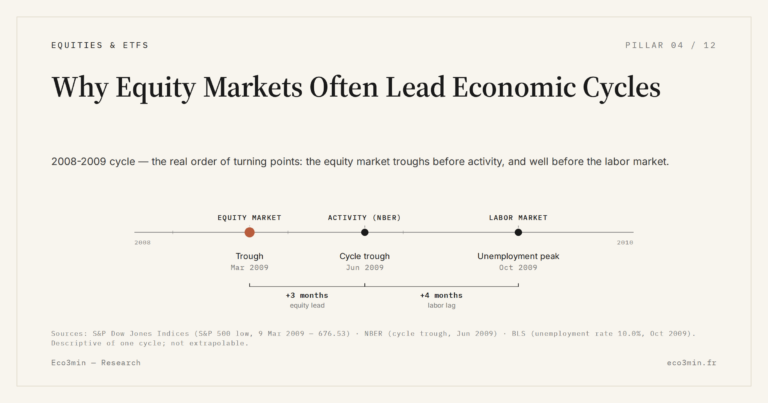
Equity markets often turn before economic cycles materialize in macroeconomic statistics. This forward-looking mechanism, structural to financial markets, explains the persistent timing gap between equity prices and economic data.
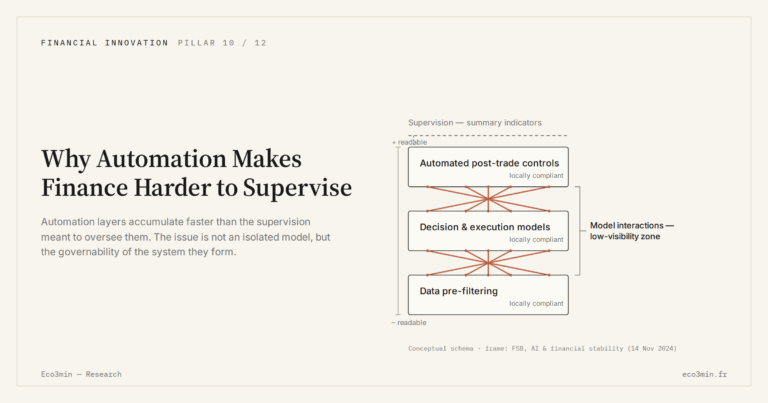
Stacking automated layers improves local efficiency but reduces overall readability, leaving supervisory frameworks behind the complexity they are meant to govern.
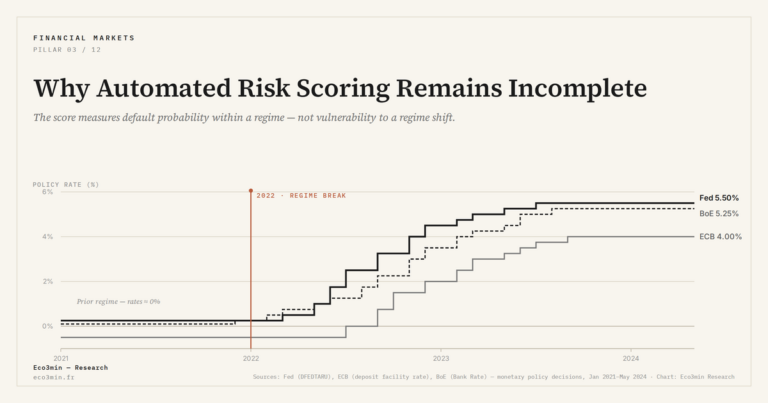
Automated credit scoring measures conditional default probability within a given environment, not vulnerability to regime shifts that historical data fail to capture.
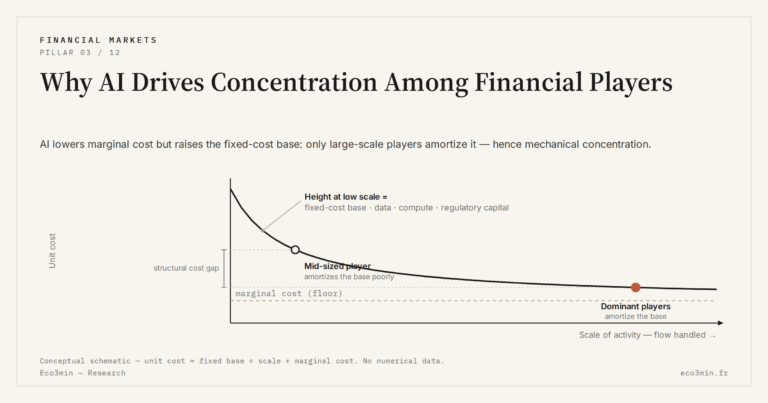
AI reinforces financial concentration by favoring players able to invest massively in data and infrastructure, lifting fixed costs and entrenching dominant institutions.
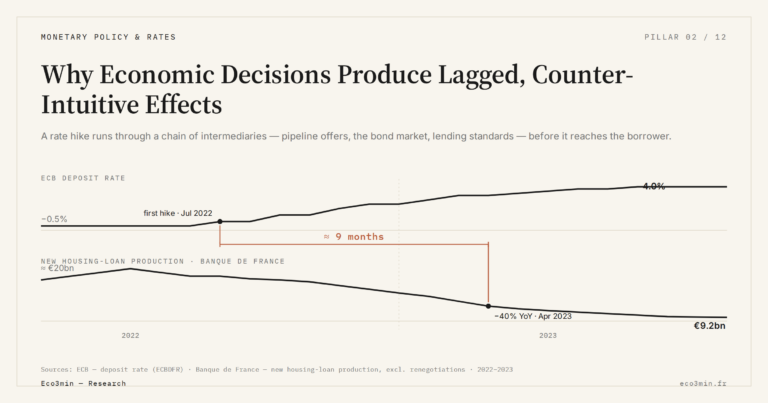
Economic decisions never produce immediate effects. Their transmission runs through multiple channels — bond markets, bank refinancing, lending standards — that filter and delay the initial signal in often counter-intuitive ways.