
Rental Real Estate in 2026: Buy, Hold or Sell?
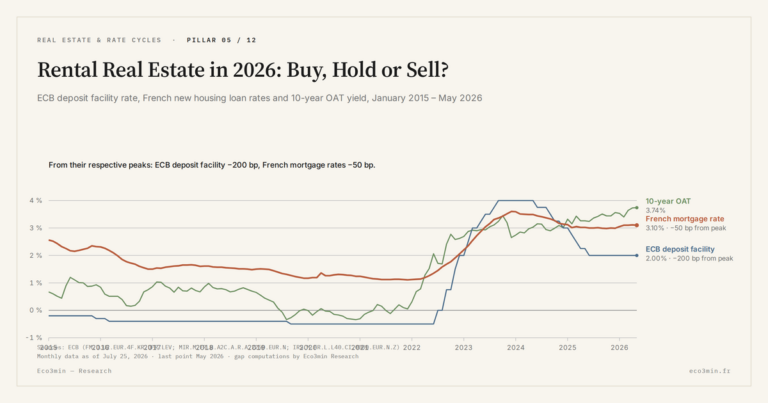
Rental real estate in 2026: weighing the buy, hold or sell trade-off in a regime of stabilized rates and rental yields under pressure.
Rental real estate in 2026: weighing the buy, hold or sell trade-off in a regime of stabilized rates and rental yields under pressure.
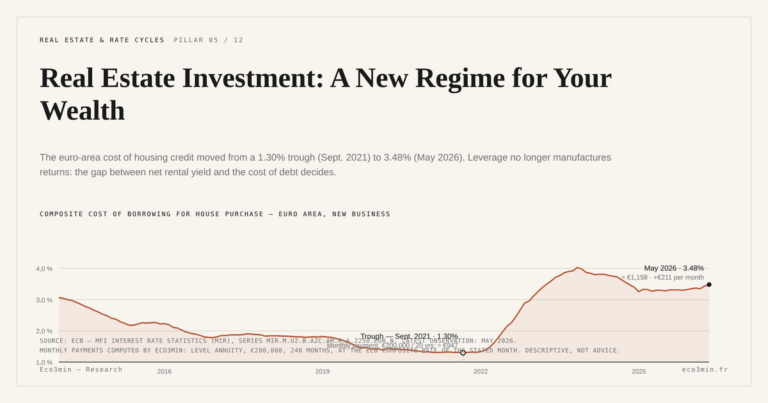
Real estate investment: why the end of free money is reshaping returns, credit, and the role of property within overall wealth allocation.
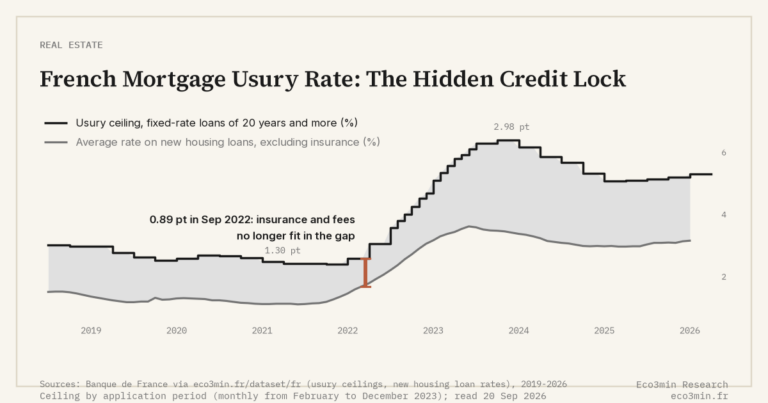
How the French mortgage usury rate reshapes access to credit in 2026, compresses bank margins and conditions purchase or investment decisions.
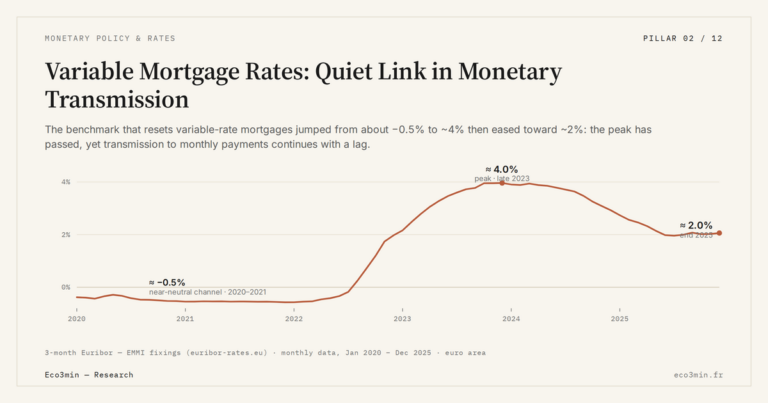
Variable mortgage rates continue to transmit prior rate hikes long after central banks pause. How this delayed channel reshapes consumption, default risk and monetary room for maneuver.
Housing inflation: how persistent rent and price increases are reshaping growth, wages, margins and medium-term investment dynamics.
Residential real estate adjustment now runs through credit and transaction volumes rather than headline prices. With mortgage rates anchored above the 2010s, the trade-offs for buyers and investors have been reshaped — without a sharp price drop.
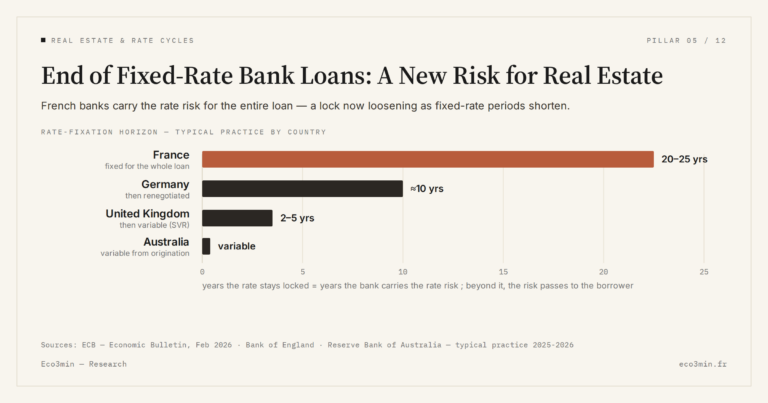
The end of fixed-rate bank loans is reshaping real estate cycles: how this structural shift modifies risk, prices and financing.
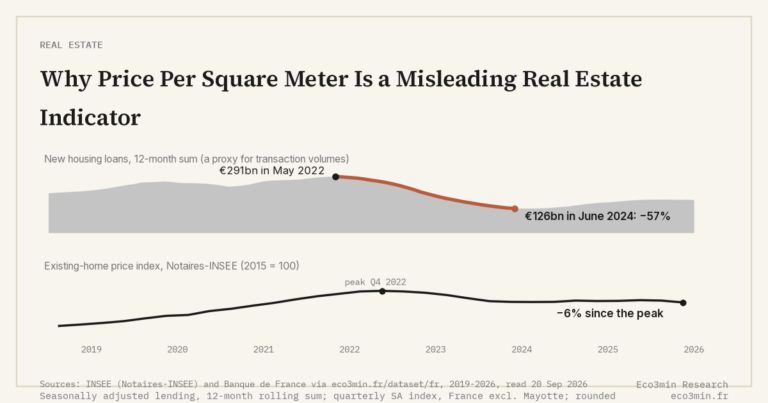
Property heterogeneity and shifting transaction composition explain why price per square meter is an incomplete indicator of real estate market dynamics, particularly during periods of contracting volumes.
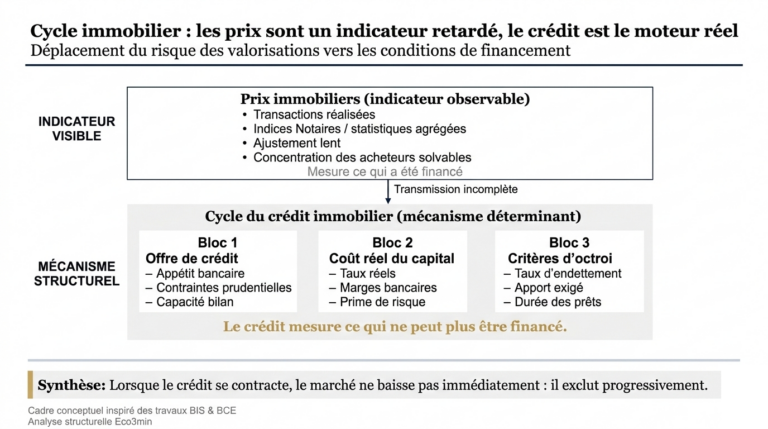
Property prices act as a lagging, fragmentary indicator. The real estate cycle is, first and foremost, a credit cycle—governed by lending standards, the real cost of capital, and the selectivity of financing.
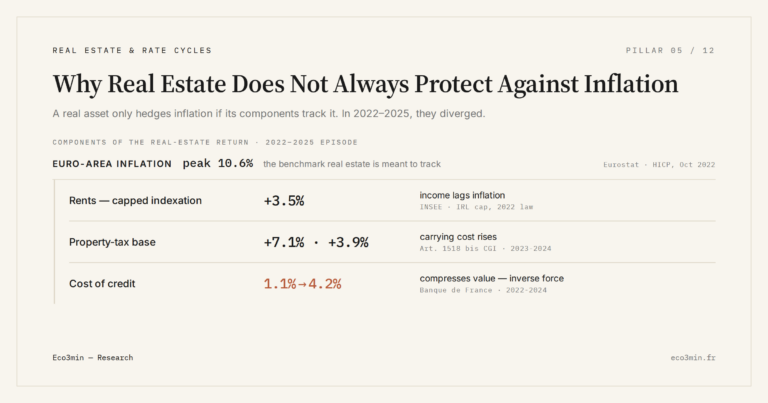
Mismatches between inflation, incomes and financing explain why real estate does not always protect against rising prices, especially in higher-rate regimes.