
Do Central Banks Really Control the Economy?
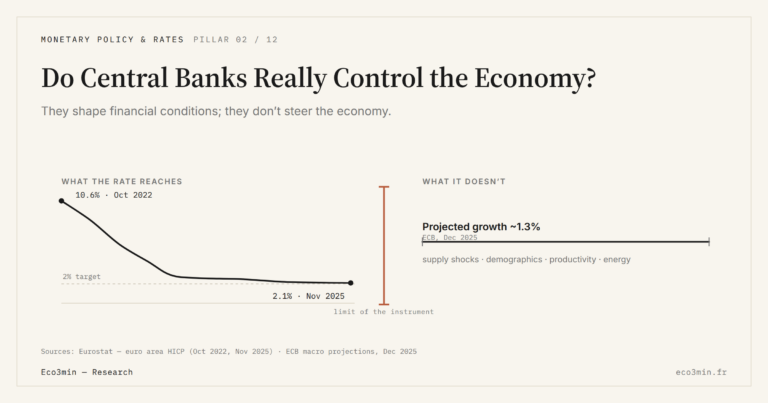
Central bank action influences the economy but remains constrained by private behavior and financial structure. The 2022-2025 ECB cycle illustrates both the reach and the limits of the rate instrument.

Central bank action influences the economy but remains constrained by private behavior and financial structure. The 2022-2025 ECB cycle illustrates both the reach and the limits of the rate instrument.
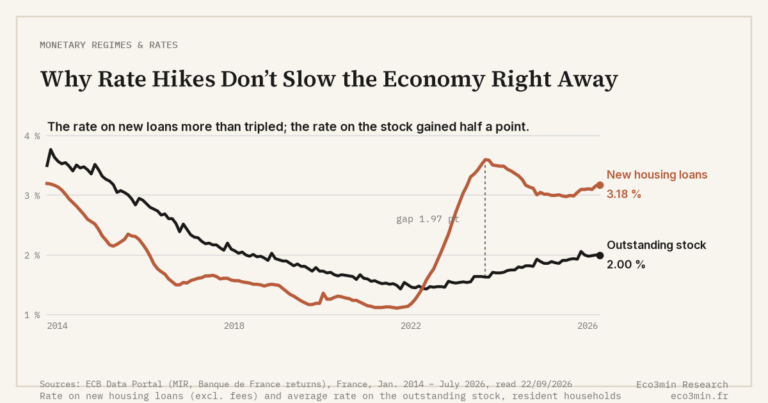
Rate hikes act on the economy with a lag because of decision delays and existing contracts. Financial markets reprice within hours, but real activity only adjusts over four to six quarters.

Gold is not a conventional commodity but a latent monetary asset. Its price tracks real rates and monetary credibility more than headline inflation, with central bank flows now reshaping the market.
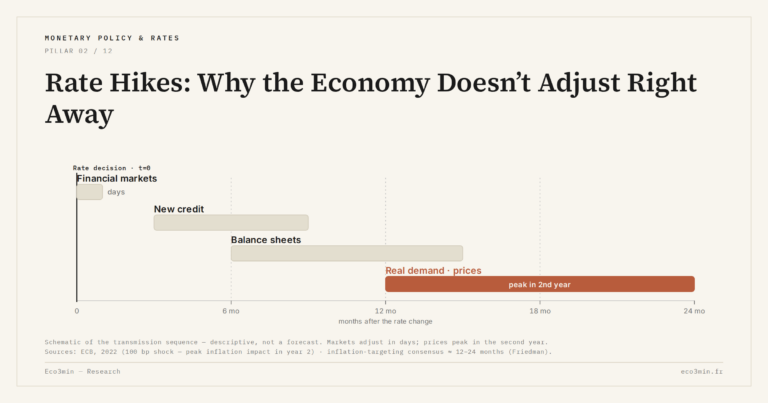
Monetary transmission is never instantaneous. Existing contracts, balance sheets and investment commitments propagate rate changes progressively rather than as an immediate shock. This inertia shapes the rhythm of the monetary cycle.
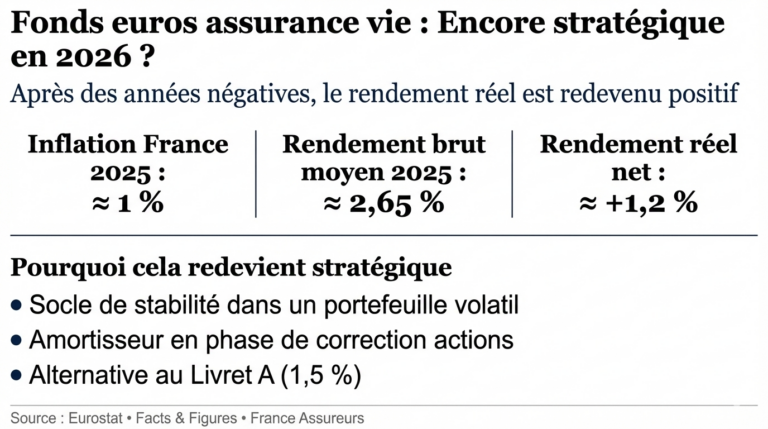
Euro funds in French life insurance regain strategic relevance in 2026 amid positive real rates and renewed market volatility. Their role: securing capital, absorbing shocks and structuring long-term allocation.
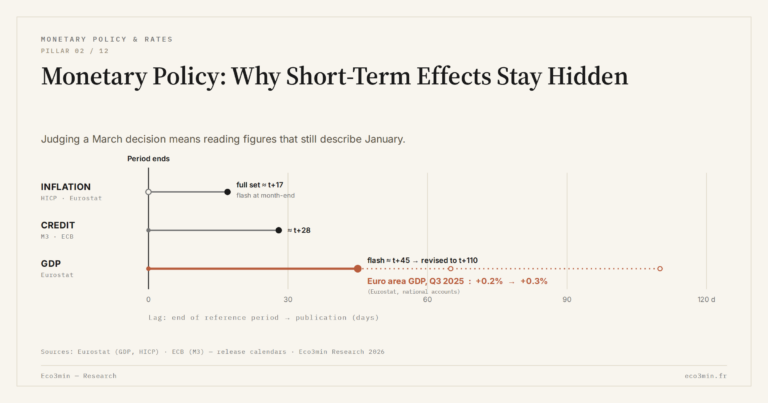
Monetary decisions produce real effects, but rarely visible in the short run. The gap between policy action, private adjustments and statistical releases creates an illusion of ineffectiveness.
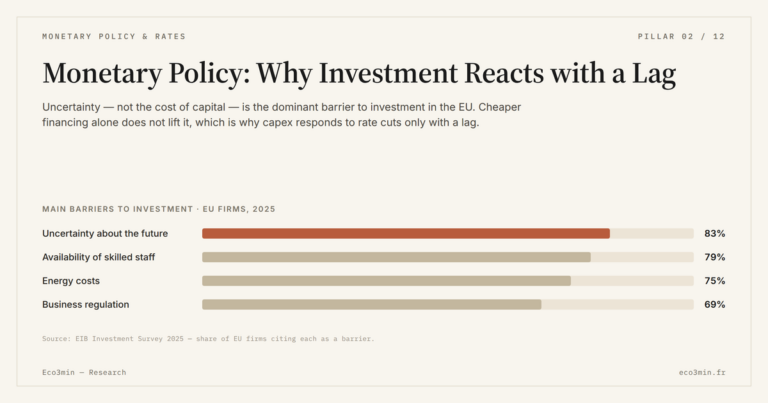
Productive investment does not adjust instantly to monetary conditions. Project irreversibility, fixed costs and macroeconomic uncertainty extend the lag between rate cuts and effective capital expenditure.
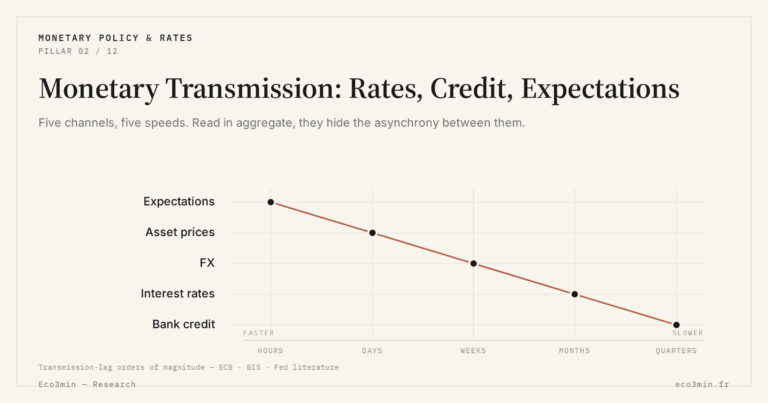
Monetary policy never operates through a single lever. Rates, credit, asset prices, FX and expectations propagate at distinct speeds, producing a transmission that is fragmented and at times incomplete.
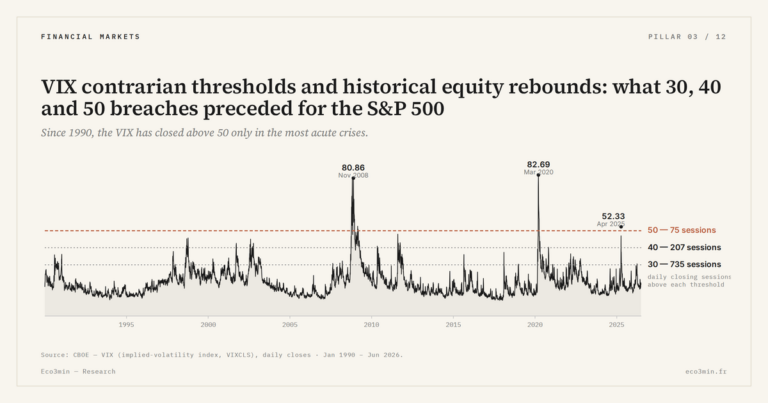
Since 1990, the VIX has closed above 50 in only three crises (2008, 2020, 2025) and touched it intraday in three more (2015, 2018, 2024); five of those six breaches were followed by a higher S&P 500 twelve months later.…
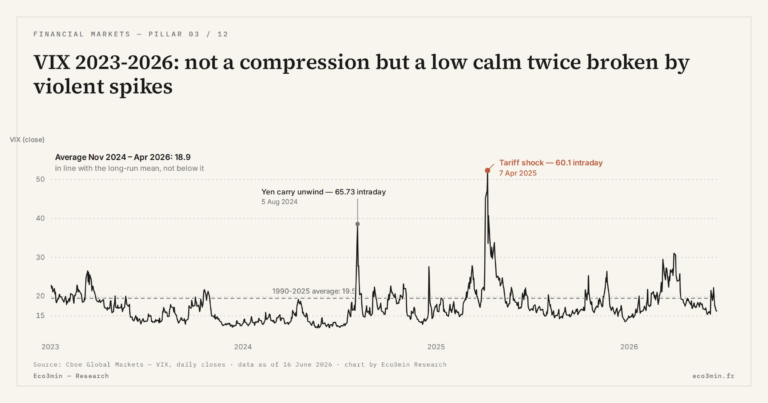
From November 2024 to April 2026 the average VIX stands at 18.9, in line with its 1990-2025 average (19.4), not below it: this is not a compression but a low calm broken twice, by the yen carry trade on 5…