
Real Estate Investment: A New Regime for Your Wealth
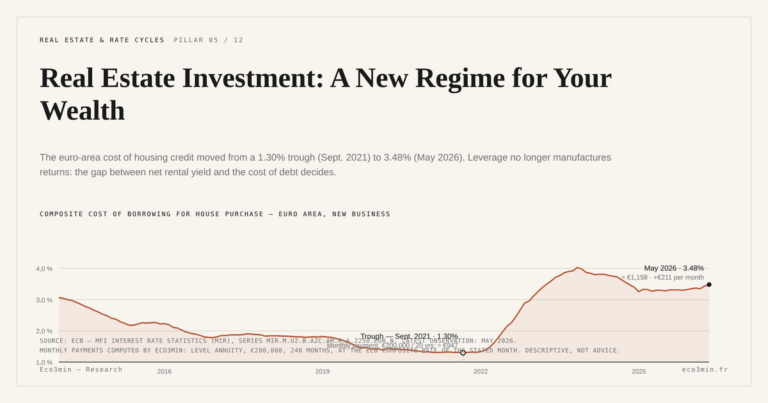
Real estate investment: why the end of free money is reshaping returns, credit, and the role of property within overall wealth allocation.
This tag gathers articles analysing the major structural economic configurations: persistent inflation, disinflation, stagflation or deflation. It focuses on transitions between regimes and the ruptures that redefine the investment environment. A macro-financial regime change durably alters the behaviour of assets, central banks and economic agents. It is not a one-off event but a shift in logic.
Real estate investment: why the end of free money is reshaping returns, credit, and the role of property within overall wealth allocation.
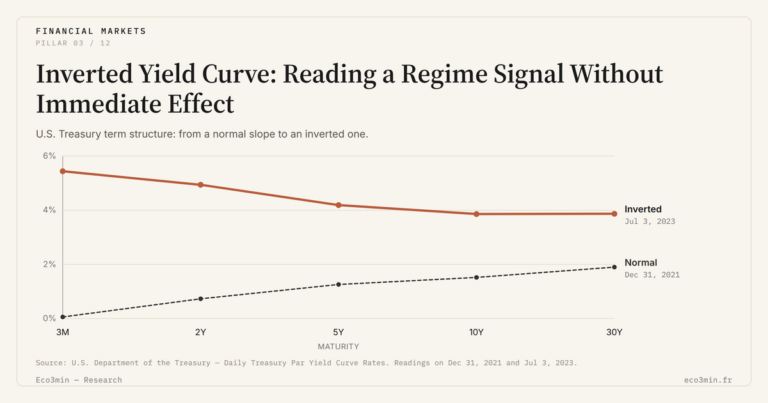
The inverted yield curve operates as a regime signal, not a timing tool. Its lagged effects are constitutive of the indicator, not a flaw — and explain why intermediate phases are often the longest and most misread.
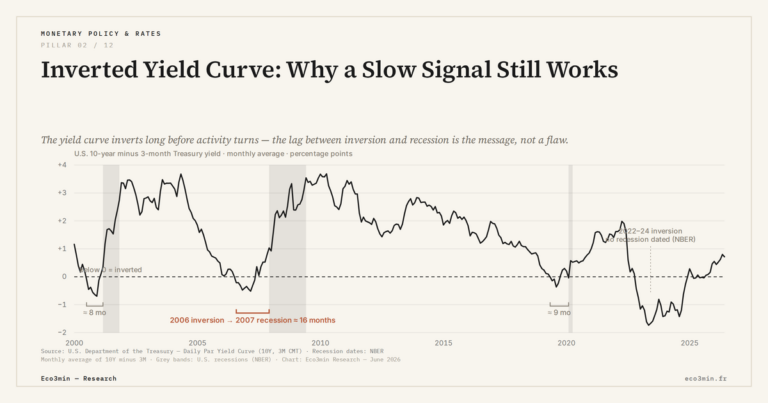
The inverted yield curve does not promise a dated event. It describes a regime imbalance whose slowness is integral to its meaning, not evidence that it has failed.
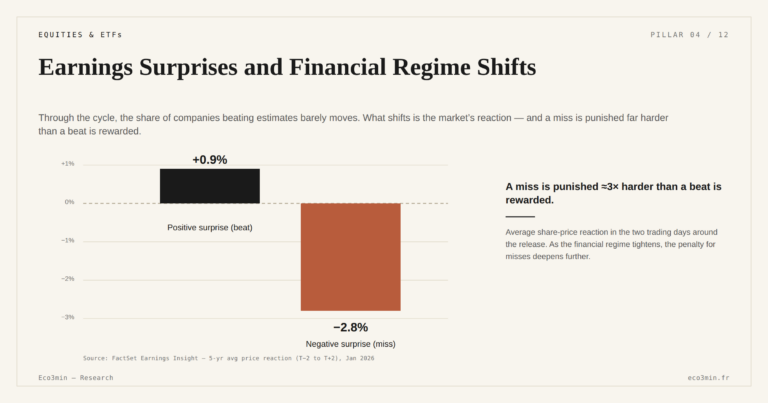
Earnings surprises reveal far more than a quarterly miss. They are an early indicator of the shift from a tolerant environment to a more constrained financial regime, often well before any visible index correction.
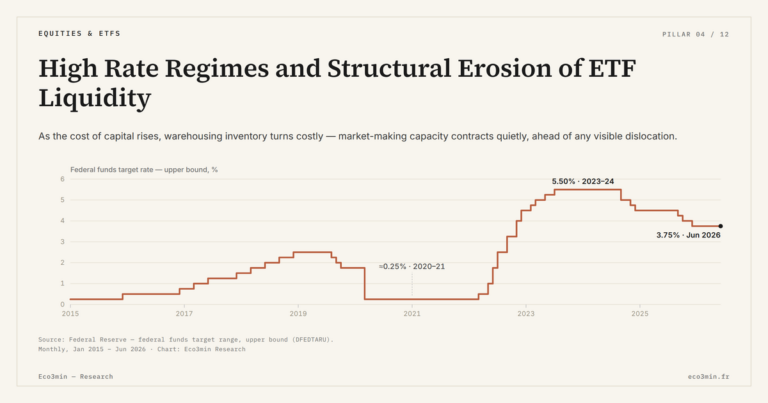
ETF liquidity is often treated as a given. In a regime of sustainably high rates, capital costs and balance sheet constraints quietly reshape the architecture supporting that liquidity, well before any visible market dislocation emerges.
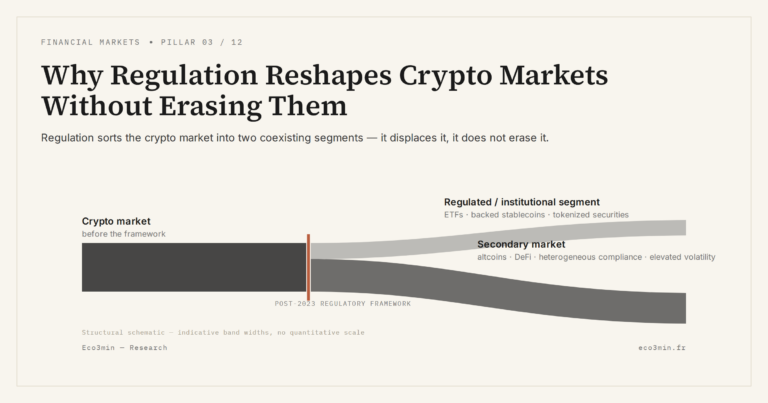
Regulation does not eliminate crypto-assets but reshapes their structure, actors and market dynamics. An economic analysis of the durable transformation underway.
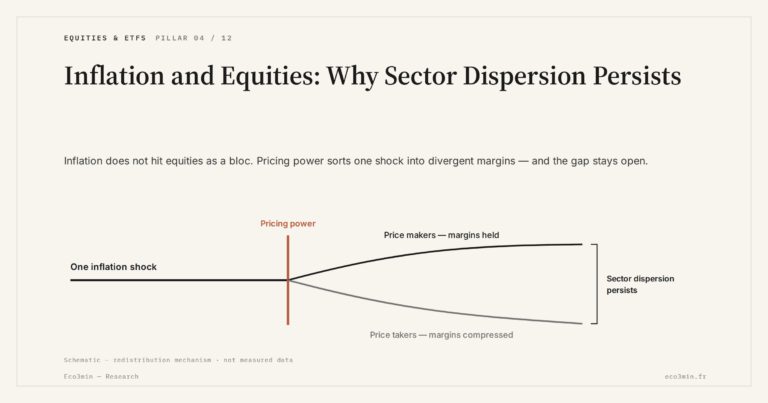
Inflation does not affect all equities equally. Differentiated effects across sectors and margins explain a growing share of the dispersion observed within equity indices.
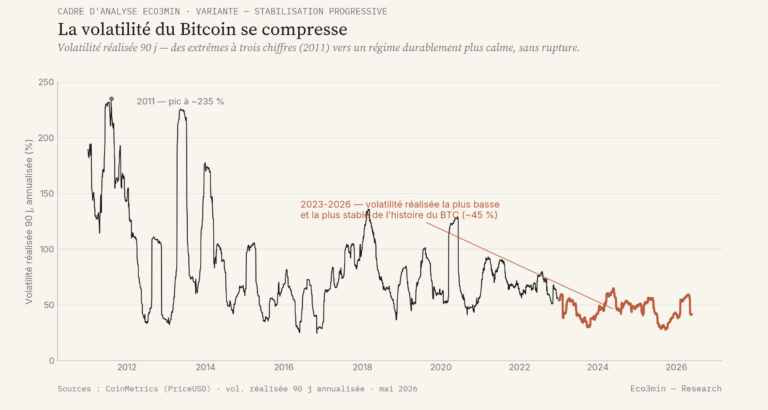
Bitcoin’s volatility has compressed from the 2011 extremes toward a durably calmer regime — a gradual maturation that regulation accompanies, without having caused it. TL;DR Bitcoin's calmer regime traces to a decade of market maturation (deeper liquidity, larger capitalization) that…
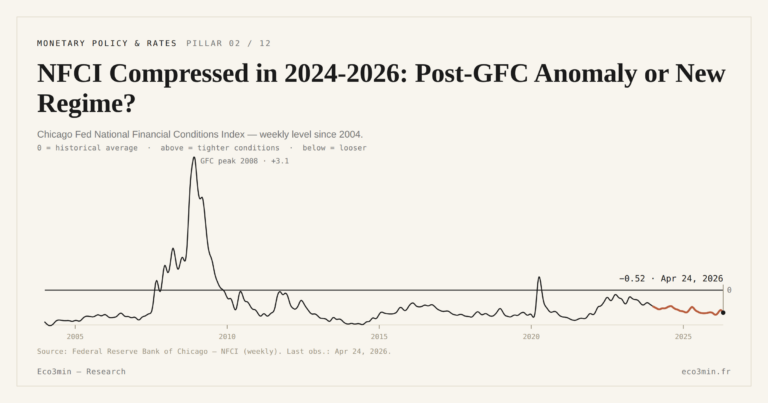
May 2026: NFCI at −0.55, a compression rarely observed after a monetary tightening phase. Fed-to-financial-conditions transmission appears to operate differently than in previous cycles. TL;DR Two years into a rate-cutting cycle, with QT still running, the NFCI reads -0.55 in…
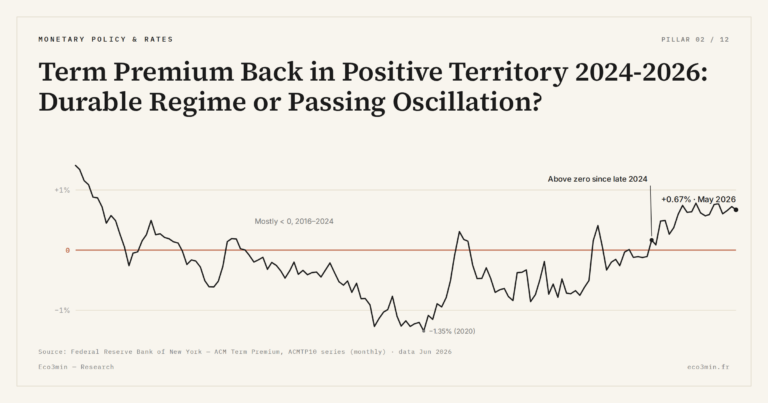
In August 2024, after eight consecutive years in negative territory, ACMTP10 moved durably above zero. The crossing is not statistical noise but the combined effect of three forces whose respective weight and durability the academic literature debates without resolution. TL;DR…